

What is a Secure Shell (SSH)
SSH, or Secure Shell, is a secure network protocol that enables remote control of computers over an unsecured network. SSH establishes a secure, encrypted connection between client and server machines, providing a secure path for data exchange and remote system control. We highly recommend using SSH because it ensures that all data and actions are encrypted and secure, preventing unwanted access and data leakage.How to use SSH to connect to your remote VPS
Open a terminal or command prompt on your local machine and type:yes, then enter the VPS password. Password input normally shows no characters; this is expected.
If the connection is successful, you’ll see a welcome message from the remote server, and you’ll get a command prompt in the remote server’s shell. You can then run remote commands and upload/download files as needed using the SSH connection.
Make sure you have SSH access enabled and have the correct user credentials to log in to the VPS.
For a custom SSH port, use ssh -p 2222 username@remote-host, replacing 2222 with the configured port. If authentication fails, check the username and password or use the Linux password-reset guide. For a timeout, follow network troubleshooting.
When you finish working on the remote server, type:
Remote host identification has changed
This warning means the host key presented by the server differs from the key your SSH client saved for that address. It can happen after you reinstall the VPS, but it can also indicate that you are connecting to the wrong server or that someone is intercepting the connection.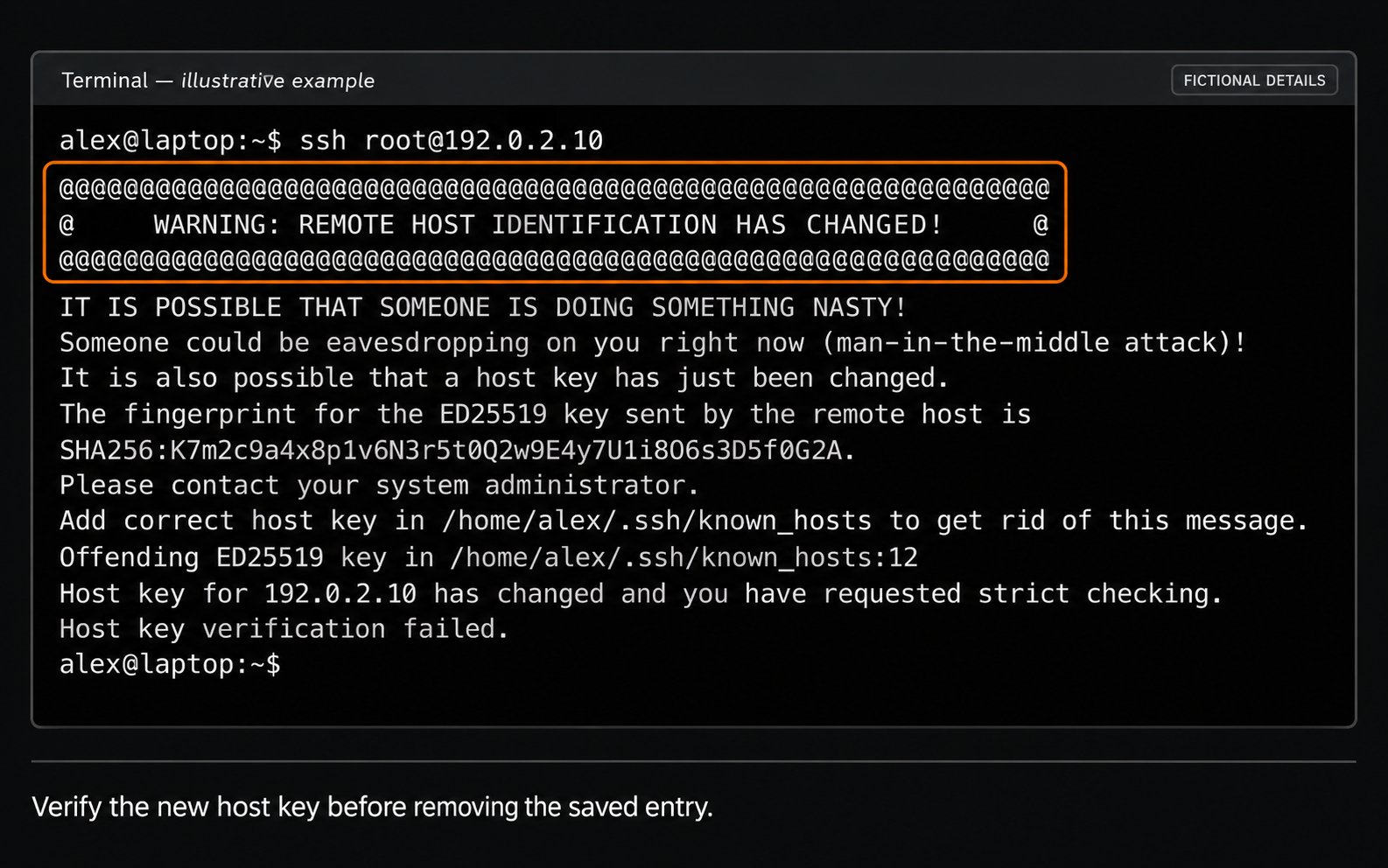
Illustrative OpenSSH warning. The IP address, username, fingerprint, and file path are fictional; wording may vary by SSH client.
Verify the new key first
Open the VPS through the VNC console and display the fingerprint of the key type named in the warning. For ED25519:SHA256: fingerprint with the one shown by your SSH client. For an RSA or ECDSA warning, inspect the corresponding ssh_host_rsa_key.pub or ssh_host_ecdsa_key.pub file instead.
Remove the old entry on your computer
Only after verifying the new host key, run this on the computer from which you connect:YOUR_VPS_IP with your VPS address and root with your login username if different. If you connect using a hostname, use that hostname instead. This removes the saved host key for that destination; it does not change the VPS password.
For a custom port such as 2222, use the bracketed host-and-port form:
ssh-keygen -f /path/to/known_hosts -R YOUR_VPS_IP. See the OpenSSH key-management manual.