

Which option should I use?
Find the Restart menu
- Sign in to the VPS Management Portal.
- Open Services → My Services, then select your VPS.
- On the Server Information tab, find the server management panel.
- Click the yellow Restart button to open the menu.
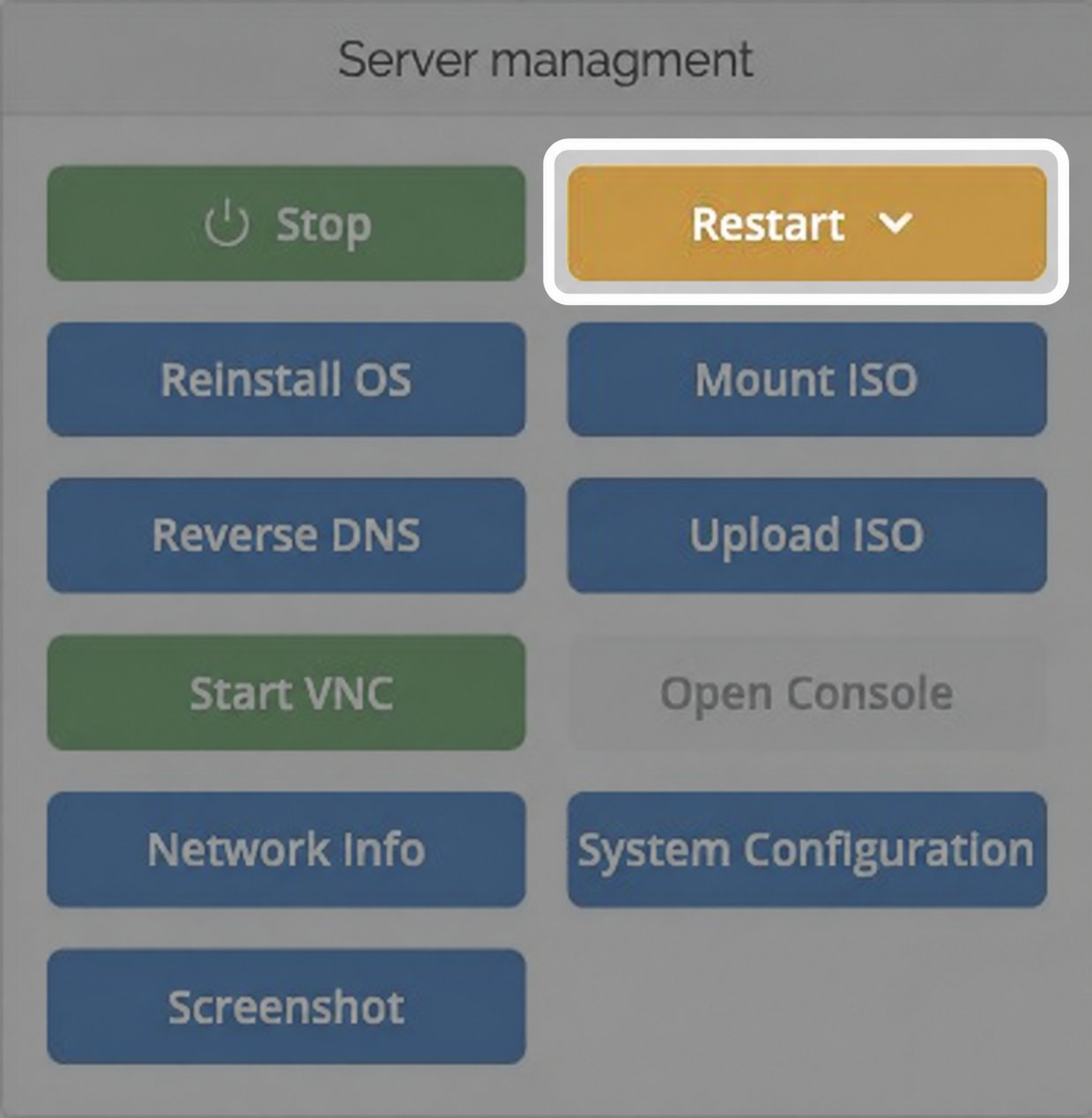
The yellow Restart button opens the restart options.
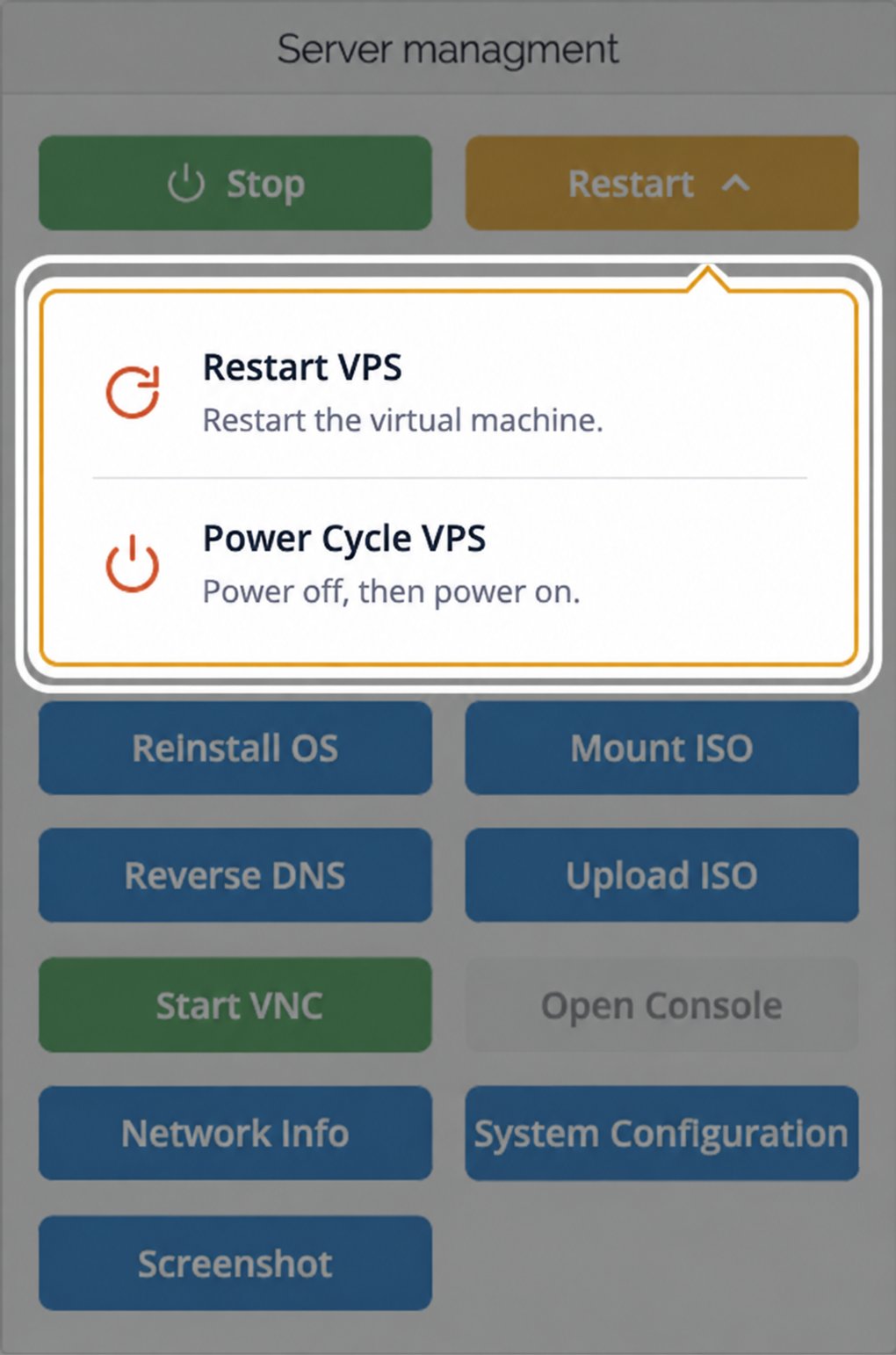
Select Restart VPS first. Use Power Cycle VPS if a restart does not resolve the problem.
Restart VPS
Select Restart → Restart VPS to reset the virtual machine without a full power-off/power-on cycle. The operating system reboots, but the process hosting the virtual machine and its VNC server stay running. If VNC is already enabled, you can follow the boot process in the console.- To watch the reboot, click Start VNC if VNC is disabled, then click Open Console. See the VNC guide.
- Open Restart and select Restart VPS.
- Wait for the operating system to boot, then reconnect to SSH or Remote Desktop.
Keeping VNC available does not keep applications, SSH or Remote Desktop connected. Those services are interrupted while the operating system restarts. Older instructions may call this action Reset VPS; the current dashboard label is Restart VPS.
Power Cycle VPS
If Restart VPS does not resolve the problem, select Restart → Power Cycle VPS. This powers the virtual machine off and back on, starting a new virtual machine process. It also stops the existing VNC server. If you were using VNC, use Start VNC again and reopen Open Console after the power cycle. Wait for the operating system and services to start before reconnecting. If the VPS still does not respond, contact support with your VPS ID or IP address, the time of the problem and what you can see in the console.Restart gracefully from Linux or Windows
For routine maintenance, save your work and restart from inside the operating system.Linux
Connect through SSH or the console and run:sudo. SSH disconnects during the reboot; reconnect after the server has started.
Windows
Select Start → Power → Restart inside Windows. Your Remote Desktop session disconnects during the reboot; reconnect once Windows and Remote Desktop are ready.Start or stop a VPS
- Start turns on a stopped VPS.
- Stop powers off the VPS and leaves it off. If Linux or Windows is responding, shut it down from inside the operating system first. Use
sudo shutdown -h nowon Linux or Start → Power → Shut down on Windows.