Install Cockpit on a Debian 13 VPS for web management
Install Cockpit on a Debian 13 VPS for web-based Linux server management, monitoring, and a browser terminal that can replace day-to-day SSH sessions.
In this guide, we walk you through installing Cockpit on a Debian 13 VPS. We also show how to use its built-in Web Terminal as an alternative management interface when SSH access is unreliable, restricted, or filtered.
Cockpit is a lightweight, web-based server management interface for Linux systems. It allows you to monitor, configure, and control your VPS directly from a standard web browser.Cockpit is especially useful for VPS environments where administrators need fast, secure, and convenient access to system management tools without relying exclusively on SSH.The Cockpit Web Terminal is particularly useful in environments where SSH access may be unreliable, restricted, or filtered by network providers, firewalls, or regional routing policies. Because Cockpit operates over secure HTTPS (port 9090), it can provide a more accessible management channel.
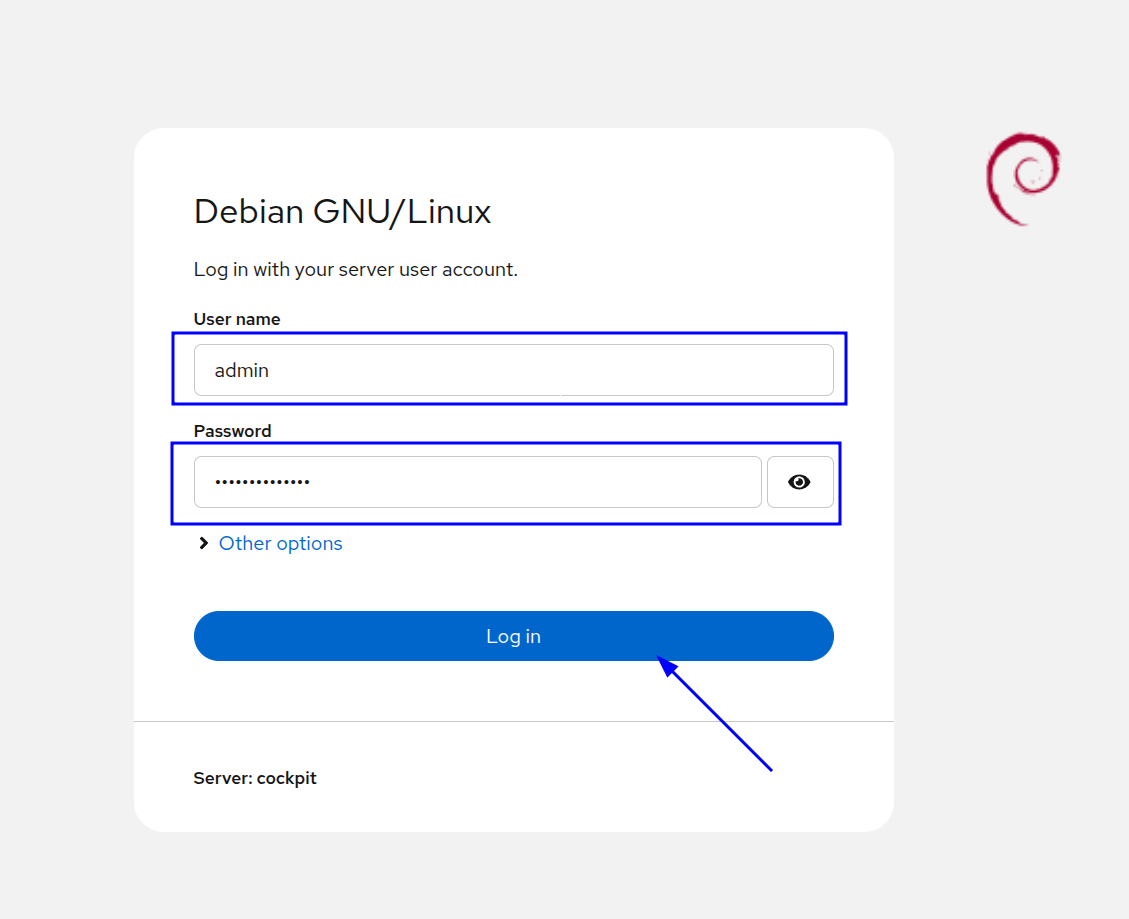
Open your web browser and navigate to https://your-server-ip:9090. Cockpit prompts you to log in with your server’s username and password. After you log in, you can access the web terminal from the Cockpit dashboard.
Cockpit uses HTTPS encryption by default. You may see a browser warning due to a self-signed certificate. This is normal for new installations. For production environments, you can install a trusted SSL certificate using Let’s Encrypt.
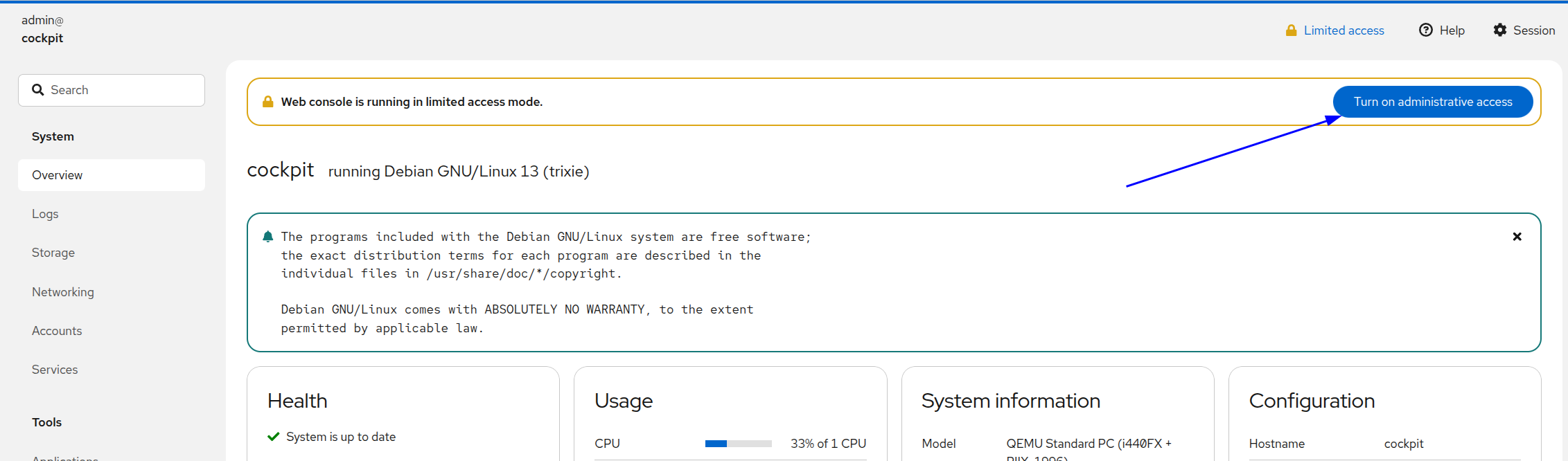
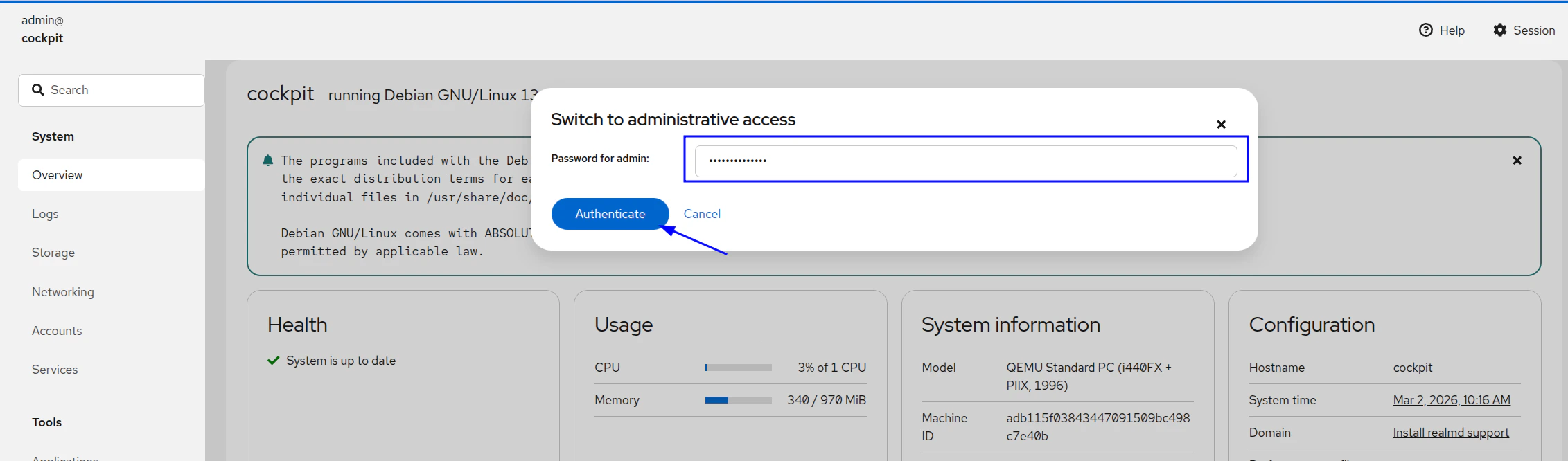
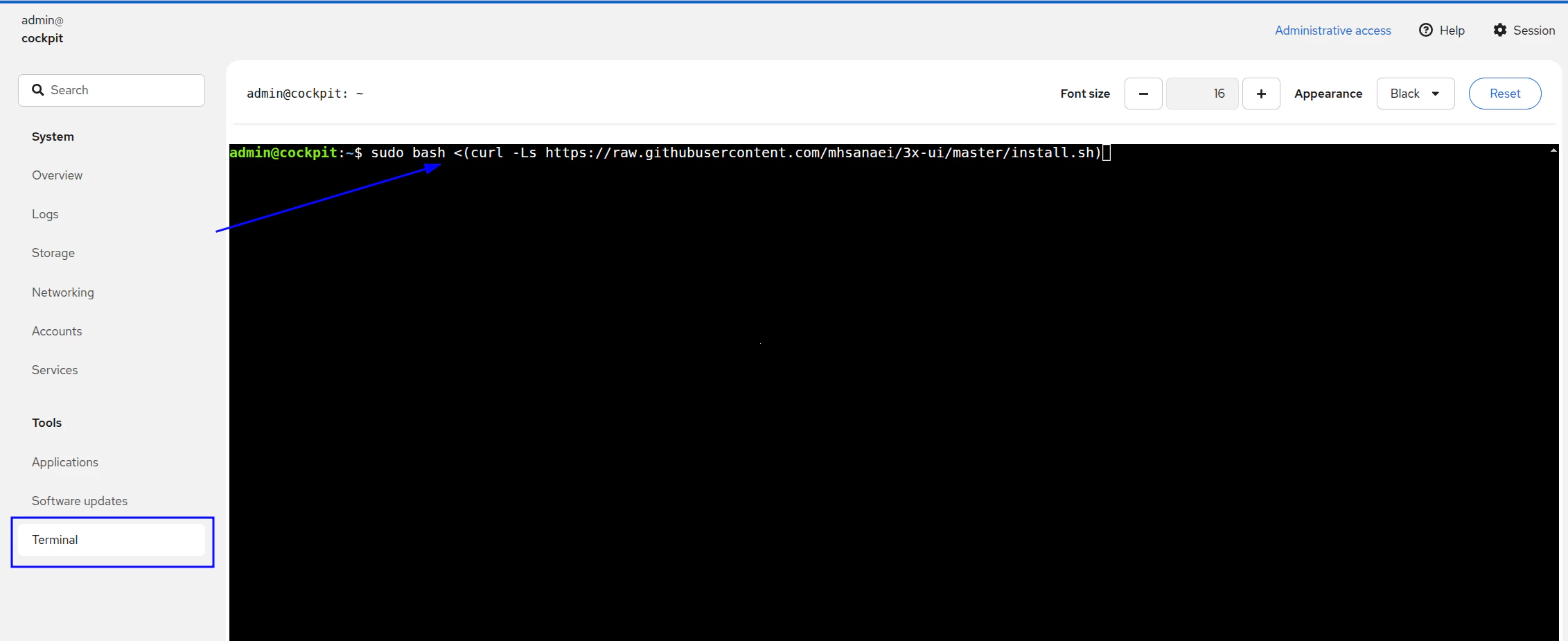
After logging in, click your username in the top right corner and select “Turn on administrative access”.Cockpit prompts you to re-enter your password to confirm elevated privileges.To switch to administrative access, Cockpit prompts you to enter your password again. Enter the password and click Authenticate to proceed.Finally, open the terminal from the left sidebar by clicking Terminal. This will open the web terminal interface where you can execute commands directly on your server. Now it’s easy to copy and paste any command from the web and execute it on your server without needing to use SSH or other remote terminal tools.Links:
Cockpit works seamlessly on EDIS Global KVM VPS hosting. It provides a convenient web-based management interface alongside SSH and VNC access.Typical use cases include:
Cockpit is a powerful and efficient web-based management tool for Linux VPS hosting. It simplifies administration, provides real-time monitoring, and includes a secure web terminal for full system control.We highly recommend Cockpit if you want easier server management without sacrificing performance or flexibility.